

When Did Play Become “Neurodiverse”?

By Dr. Aaron Bradbury

Why we need to be careful with the language we use about children’s play
In recent months I have noticed a phrase appearing more frequently in early childhood conversations:
“neurodiverse play.”

At first glance, it sounds positive. It appears inclusive. It suggests we are recognising difference and valuing children’s individual ways of interacting with the world.
But the more I hear it, the more uneasy I become.
Not because I disagree with the concept of neurodiversity. Far from it. The idea that children experience and process the world in different ways is something early childhood educators have understood for decades. But I am not convinced that describing play itself as neurodiverse is helpful.
In fact, I worry it may unintentionally create a problem where one did not exist before.
Play has always been diverse
Play has never looked the same from one child to the next.
Some children build elaborate imaginative worlds.

Some become deeply absorbed in patterns, repetition or structure.
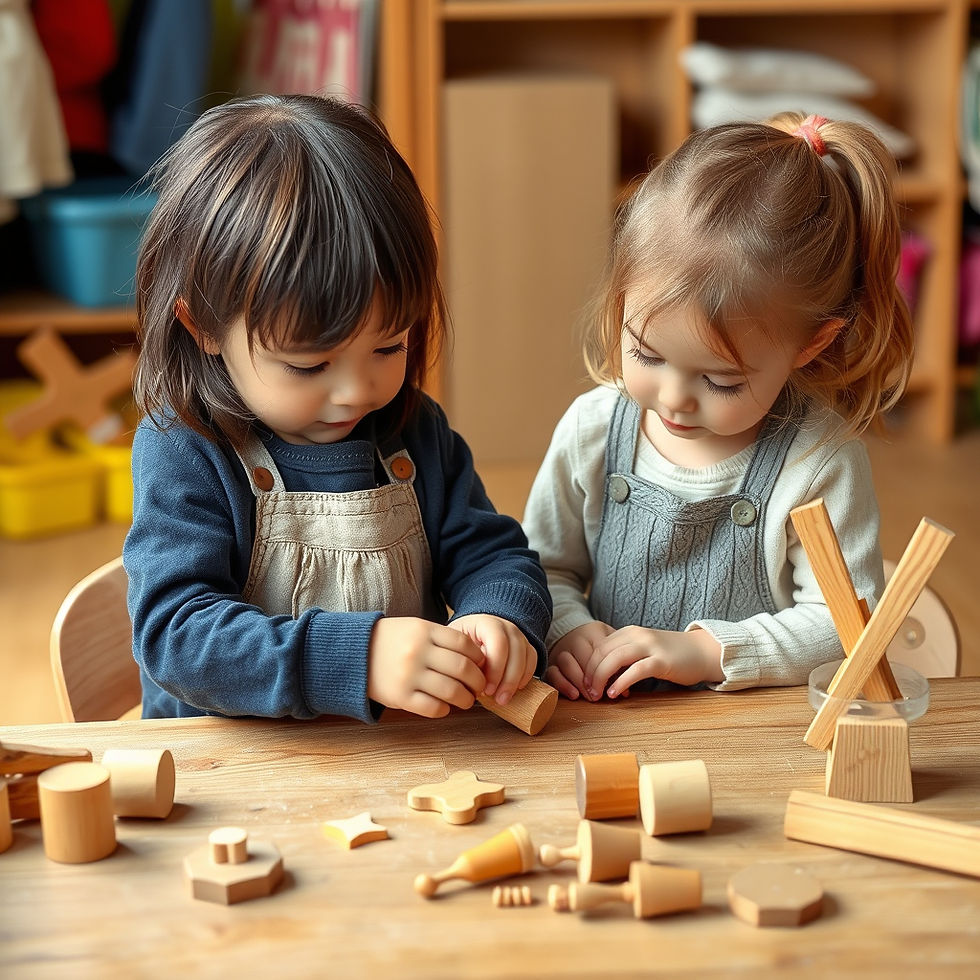
Some move constantly, exploring space through their bodies.

Others prefer quiet, focused exploration with objects or materials.

None of these ways of playing are inherently better or worse. They are simply different expressions of how children think, feel and make sense of the world around them.
For generations, play theorists have recognised this diversity. Play has always been fluid, personal and shaped by the child’s interests, experiences and relationships.
So when we begin labelling certain forms of play as neurodiverse play, we risk creating an unintended implication, that there must also be a “typical” or “normal” form of play that sits alongside it, and for me personally that is where the difficulty begins.
Children may be neurodivergent. Play is simply play.
The concept of neurodiversity, first introduced by sociologist Judy Singer, was never intended to categorise behaviours like play. It was developed to recognise that human brains function in a wide variety of ways.
Children themselves may be neurodivergent. Their ways of thinking, processing information, or experiencing sensory environments may differ from those of others. However, play itself is not neurodivergent.

Play is simply the medium through which children express their thinking, curiosity and understanding of the world.
When a child lines up objects repeatedly, spins wheels on a toy car, becomes deeply immersed in a particular interest, or explores materials in a sensory way, they are not engaging in a different category of play. They are doing exactly what play has always allowed children to do: explore, investigate, repeat, and find meaning.
The risk of creating unnecessary categories
One of the challenges in early childhood education is our tendency to create categories.
We categorise learning.
We categorise development.
We categorise behaviour.
Sometimes these categories help us understand children better. But sometimes they also narrow our thinking.
If practitioners begin to see “neurodiverse play” as something separate, it can lead to subtle shifts in practice:
viewing some play as specialist or therapeutic rather than meaningful in its own right
trying to “redirect” play into more socially accepted forms
assuming that certain ways of playing need intervention rather than understanding
In other words, we risk moving away from the fundamental principle that all play is valid.
The role of the adult is not to categorise play
The role of the adult in early childhood is not to decide which types of play are typical and which are not.
Our role is to:
create environments where children feel safe and understood
provide rich materials that invite exploration
observe children closely and respond with curiosity rather than judgement
build relationships that allow children to play in ways that feel meaningful to them
When we do this well, children’s play becomes a window into their thinking, their emotions and their interests. We do not need to label it in order to value it.
Perhaps the language we need is simpler
Instead of creating new categories of play, perhaps we simply need to remind ourselves of something early childhood educators have always known:
Children play in many different ways.
Some play socially.
Some play quietly.
Some play imaginatively.
Some play repetitively.
Some play physically.
Some play with intense focus on particular interests.
All of these are valid, all of these are meaningful and all of these are part of the rich diversity of childhood.
Play Matters
If there is one thing the early years sector should hold firmly onto, it is this:
Play does not need to be justified by outcomes.
Play does not need to be categorised to be valuable and play does not need to be divided into different types in order to include different children.
Play has always been diverse because children are diverse.
Perhaps the most inclusive thing we can do is simply recognise that play belongs to every child, exactly as they are.


Comments