

Reimagining Outdoor Learning: Why Agency Matters – and Why This Toolkit Arrives at the Perfect Time


By Rebekah Gear
Across the early years sector, we talk often about independence, curiosity, and child‑led learning. Yet when we step outside into our outdoor spaces, the very environments we assume are liberating, often tell a different story. Sometimes this unfolds as tales of children avoiding challenges, hesitating around mess and reluctant to take risks. More often than not, these patterns echo the subtle messages adults send through language, routines, and the way we organise the environment.
This tension sits at the heart of the Reimagining Outdoor Learning: Outdoor Agency Toolkit, a free, research‑informed resource developed through a Close‑to‑Practice (CtP) inquiry between Nottingham Trent University and an EYFS setting in Nottinghamshire. The toolkit is now freely available to download, and it offers something the sector urgently needs: a practical, evidence‑based way to strengthen children’s agency outdoors.
Why Agency Needs Reclaiming
Agency, a child’s capacity to choose, act, influence, and shape their environment and existence within it, is a cornerstone of high‑quality early years practice. It is deeply rooted in sociocultural theory, ecological systems thinking, and the Reggio Emilia view of children as protagonists in their own learning.
Yet, agency has quietly slipped away from the most recent versions of the EYFS Framework (DfE, 2024) and Development Matters (DfE, 2023). This silence risks narrowing practice and shifting attention away from children’s rights to autonomy, decision‑making, and meaningful participation.
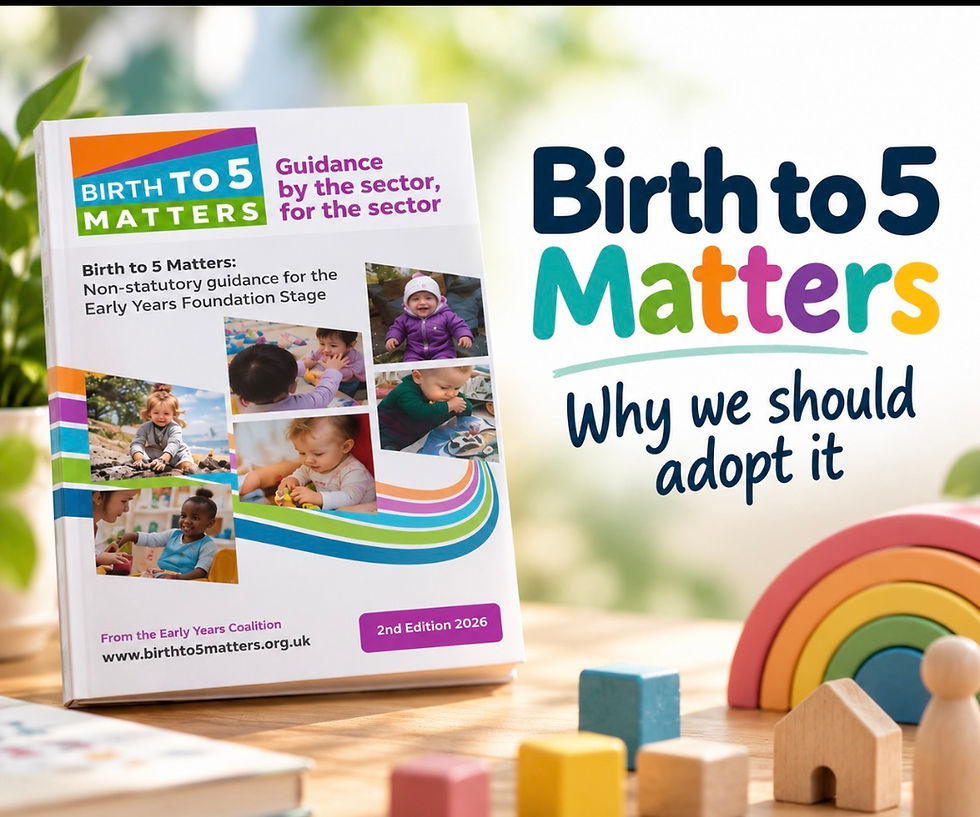
In contrast, Birth to 5 Matters (2021) positions agency as fundamental, emphasising children’s right to choose, influence, and express preferences. The toolkit builds on this stance, offering a way for practitioners to keep agency alive in practice, even when policy no longer frames it within its discourse.
What our Research Revealed
The CtP inquiry underpinning the toolkit explored a deceptively simple question:
How do children experience agency outdoors, and how do adult narratives around risk shape that experience?
Through observations, child‑led photography, focus groups, and iterative action research cycles, several powerful themes emerged:
1. Adult language shapes children’s choices
Children repeatedly referenced adult messages when explaining what they avoided outdoors. Comments such as “I don’t like getting wet” or “I might hurt myself” reflected internalised adult anxieties more than children’s own instincts.

2. The environment is never neutral
Areas associated with mess or risk, including mud kitchens, water play, climbing, were used less frequently. Children gravitated towards tidy, structured spaces that felt “safe” and familiar.

3. Small changes make a big difference
When adults shifted from risk‑avoidance to risk‑supportive language, and when resources were made more accessible, children’s confidence grew. They explored more widely, took manageable risks, and expressed preferences more openly.

4. Home–school influences matter
Children carried expectations from home into their outdoor play. Some avoided climbing because they were “not allowed” to at home; others avoided swings or messy play for similar reasons. This ecological interplay echoes Bronfenbrenner’s (1979) reminder that children’s experiences are shaped across systems, not in isolation.

These findings shaped the design of the Outdoor Agency Toolkit—ensuring it is grounded not in theory alone, but in children’s lived experiences.
What the Toolkit Offers
The Outdoor Agency Toolkit is a practical, adaptable resource designed to help practitioners create outdoor environments where children’s agency can genuinely flourish. It includes:
The Outdoor Agency Model – a clear framework showing how environment, adult role, and culture interact to shape agency.
Environmental Enhancers – tools for making spaces choice‑rich, open‑ended, flexible, risk‑enabled, and designed for independence.
Adult Role Cards – supporting practitioners to adopt roles such as facilitator, co‑learner, observer, and risk supporter.
Risk‑Positive Practice Pack – language prompts and strategies for reframing risk as a learning opportunity.
Photo‑Voice Tools – enabling children to document what they value, avoid, or want to change outdoors.
Home–School Alignment Materials – helping families understand the importance of independence and manageable risk.
Action Research Toolkit – supporting settings to embed reflective, iterative cycles of improvement.
Every element is designed to be flexible, responsive, and rooted in real practice—not a checklist, but a lens for thinking differently.
Why This Toolkit Belongs in Every Early Years Setting
The Outdoor Agency Toolkit offers early years professionals a powerful way to rethink their outdoor provision. It enables practitioners to see their environment through children’s eyes, using approaches like Photo‑Voice to reveal what children genuinely experience rather than what adults assume. It strengthens reflective practice by encouraging teams to step back, observe, and notice the subtle messages their language and routines may be sending. The toolkit is intentionally practical, offering ready‑to‑use tools, from risk‑positive language prompts to environmental audits, that can be implemented immediately in real settings. Because it is grounded in Close‑to‑Practice research (BERA, 2018), it bridges the gap between academic insight and everyday action, making research meaningful and accessible. Most importantly, it helps practitioners cultivate a culture of agency at a time when the term has slipped from statutory guidance, ensuring children’s autonomy remains central through intentional, reflective practice.

A Call to the Sector: Let’s Reclaim Agency Together
Outdoor spaces are not inherently liberating. They become liberating when adults adopt a stance of trust, curiosity, and responsiveness. Agency is not a fixed trait; it is co‑constructed through relationships, routines, and the environment.
This toolkit is an invitation:
to listen more closely
to step back more often
and to trust more deeply in children’s capabilities
If we want children to become confident, resilient, self‑directed learners, we must create outdoor environments that honour their choices, celebrate their independence, and support them to take meaningful risks.
The Reimagining Outdoor Learning Toolkit is free to download via Nottingham Trent University here:

I hope it becomes a catalyst for reflection, conversation, and change across early years settings.


Comments