

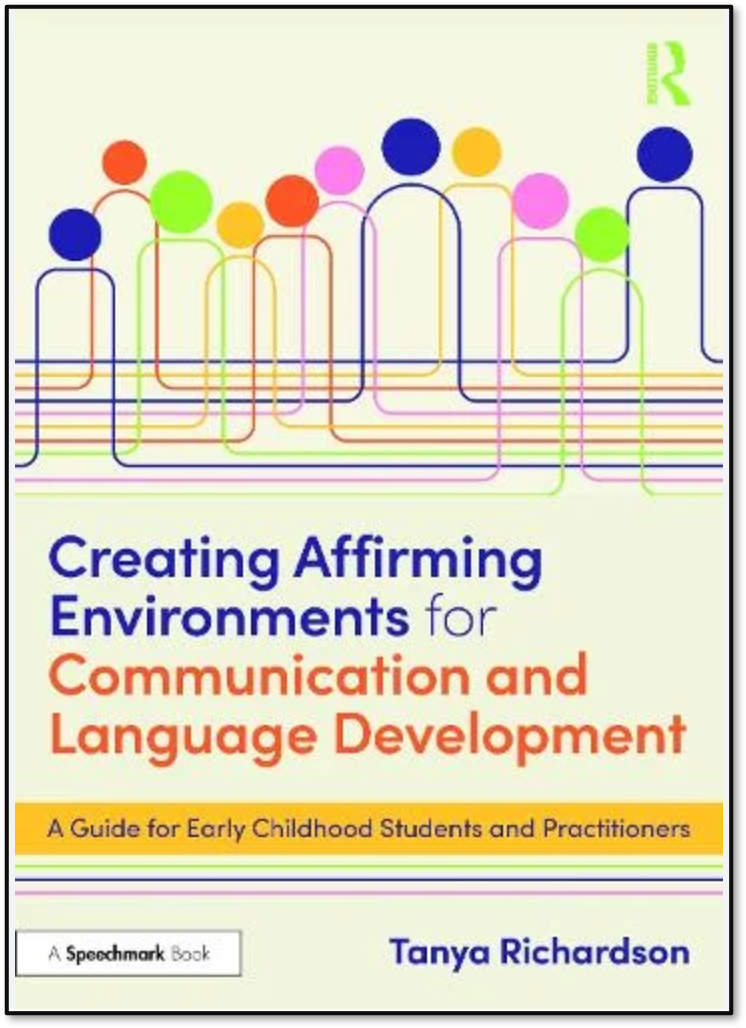
Book Review: Creating Affirming Environments for Communication and Language Development

Author: Tanya Richardson
Publisher: Routledge (2026)
By Aaron Bradbury
Communication and language sit at the heart of early childhood. They shape relationships, underpin learning and enable children to express their thoughts, feelings and identities. In Creating Affirming Environments for Communication and Language Development, Tanya Richardson provides an accessible and thought-provoking guide that reminds us that communication is not simply something children do, it is something that environments either nurture or inhibit.
Drawing upon research, theory and practical examples, Richardson explores how thoughtfully designed environments can actively support children's communication and language development across a wide range of contexts, from indoor and outdoor classrooms to forest schools and home learning environments. Rather than focusing solely on adult-led strategies, the book positions the environment itself as an active participant in children's learning, the often-cited "third teacher."
One of the book's greatest strengths is its balance between theory and practice. Richardson carefully explains key concepts before illustrating how they can be translated into everyday practice through case studies, reflective activities and real-world examples. This makes the book equally valuable for students beginning their journey into early childhood education and experienced practitioners seeking to critically reflect on their own environments.
What is particularly refreshing is the book's emphasis on affirming children's diverse communication identities. Rather than presenting communication through a deficit lens, Richardson encourages educators to recognise, value and respond to the many different ways children communicate. This aligns strongly with contemporary inclusive practice and reminds us that creating effective communication environments is as much about relationships and belonging as it is about resources.
The chapters examining natural environments, manufactured resources and the emotional atmosphere of settings encourage readers to look beyond furniture layouts and displays. Richardson invites practitioners to consider how every aspect of the environment influences children's confidence, curiosity and willingness to communicate. Her earlier research demonstrating differences in children's quality of language across indoor, outdoor and forest school environments provides a strong evidence base for many of these discussions.
Perhaps the greatest contribution of this book is its optimism. Rather than presenting communication and language development as a complex specialist area beyond the reach of many practitioners, Richardson demonstrates that relatively thoughtful changes to environments, interactions and professional reflection can have a profound impact on children's experiences.
This is not simply another book about communication and language. It is a book about relationships, inclusion and creating spaces where every child feels heard, valued and able to flourish.
Who should read it?
Early childhood students
Nursery practitioners
Reception teachers
Early years leaders
Speech and language professionals
Anyone interested in creating genuinely inclusive learning environments
Final thoughts
Tanya Richardson has produced a highly accessible, evidence-informed and practical resource that deserves a place on every early years bookshelf. At a time when communication and language remain a national priority, this book offers something far more valuable than a list of strategies, it encourages us to rethink the environments we create and the messages they send to children every day. It is a timely reminder that supporting communication begins long before adults speak; it begins with the spaces in which children play, explore and belong.


Comments