

Birth to 5 Matters: Why “By the Sector, for the Sector” Really Matters

By Aaron Bradbury
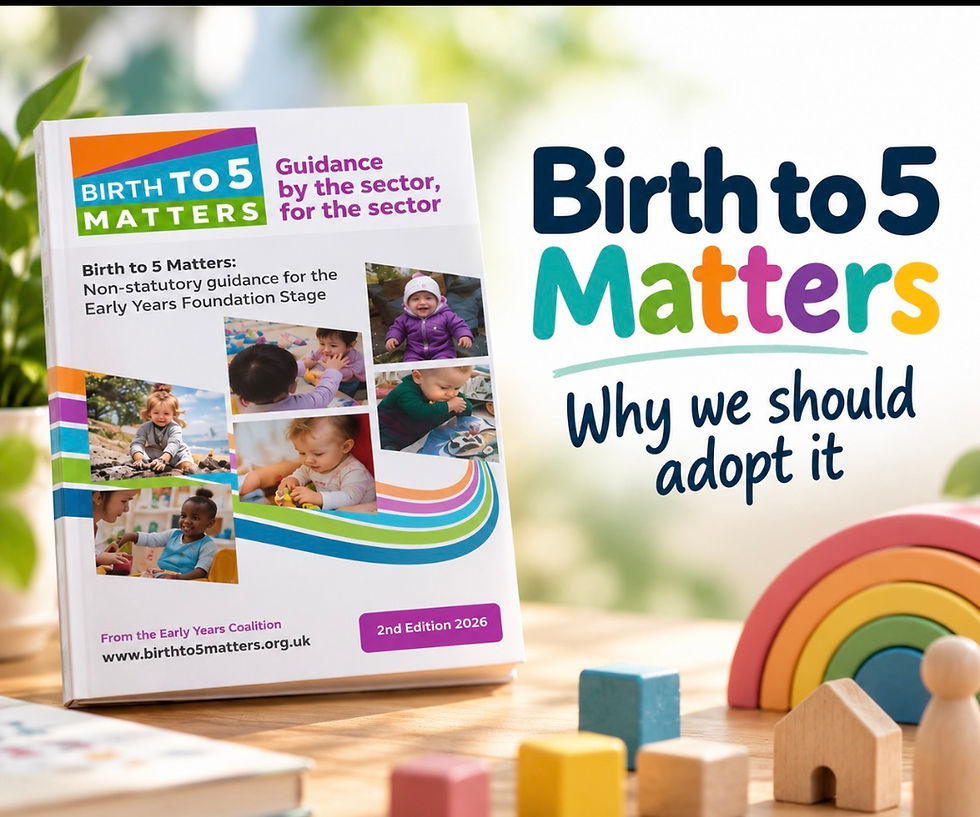
There are moments when the early years sector needs to recognise the strength of its own collective knowledge. The publication of the second edition of Birth to 5 Matters (https://birthto5matters.org.uk/wp-content/uploads/2026/08/Bto5M-PT-LINKS-Aug-Portrait-Landscape.pdf) is one of those moments.

This is more than another guidance document. It represents something increasingly important in early childhood education: practitioners, researchers, teachers, childminders, leaders, organisations and specialists coming together to articulate what high-quality early childhood practice looks like. Its organising principle remains deliberately simple: ‘by the sector, for the sector.’
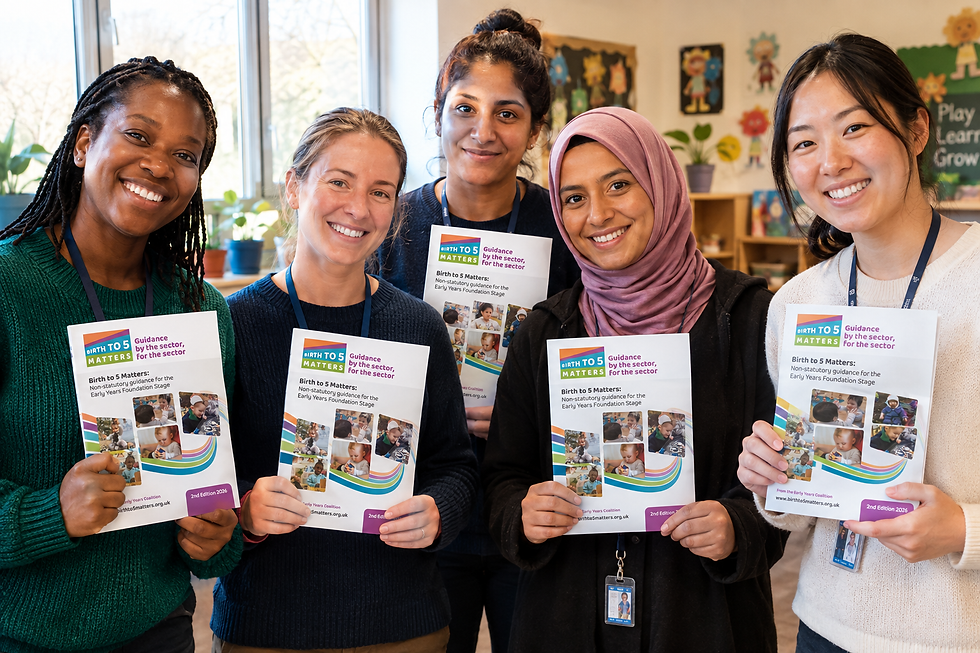
I strongly believe that this principle deserves recognition not only across our profession, but by the Department for Education and ministers responsible for early years policy.
Why Birth to 5 Matters is important
The Early Years Foundation Stage is statutory. Birth to 5 Matters is not. That distinction matters, but it should not lead us to underestimate the value of non-statutory guidance.
A statutory framework tells us what providers are required to do. High-quality professional guidance can help us think deeply about how and why we do it. Birth to 5 Matters explicitly describes itself as a reference point rather than a “how to” manual or tick-list. Its purpose is to support educators to implement the EYFS in a way that is pedagogically sound, principled and evidence-based, while retaining professional judgement about the children, families and communities they actually work with.
That is precisely why I would advocate settings and schools engaging seriously with it. Early years education cannot be reduced to a checklist of things children should demonstrate by a particular moment. Children do not develop in neat, predictable lines. They arrive with different experiences, relationships, cultures, interests, strengths and ways of making sense of their worlds. Birth to 5 Matters recognises this complexity. Its foundations place the unique child alongside positive relationships, enabling environments, learning and development, and recognise children as active agents in their learning.

Importantly, the new edition also responds to the world children are growing up in. It includes greater attention to digital pedagogy, sustainability, different ages, Reception and beyond, and guidance for primary leaders. It explicitly acknowledges something I have argued strongly for: early childhood does not suddenly end when a child reaches four or five.That has significant implications for the conversations we need to have about pedagogical continuity between Reception and Year 1.
A document that starts with children
One of the greatest strengths of Birth to 5 Matters is where it begins. It begins with children.
The guidance explicitly reaffirms the child at the centre of practice, while recognising the importance of family, community, culture and the natural world. It considers the whole child, physical, social and emotional wellbeing, health and learning, and grounds practice within children’s rights, including their rights to be heard and to play.

For me, this matters enormously. We need high expectations for children, but high expectations should never become narrow expectations. We should want children to flourish, communicate, think, imagine, build relationships, develop agency, experience belonging, become increasingly independent and encounter the joy and possibility of learning.
That is why I am particularly pleased to see play given such prominence. Birth to 5 Matters describes play as contributing powerfully to wellbeing, development and learning. It recognises the freedom children need to become deeply involved in play and the agency involved in deciding what, where, how and with whom they play.
Perhaps one of its most important messages for the current climate is this: when play comes under pressure because systems demand easily visible outcomes or narrow measures of progress, professional confidence becomes essential. The guidance is unequivocal that play is not the opposite of learning but one of the most meaningful and developmentally appropriate ways young children learn.
That feels like a message worth hearing far beyond the early years workforce.
Why “by the sector, for the sector” matters
There is another reason I think government should take Birth to 5 Matters seriously.
It demonstrates what happens when you trust a profession.
The second edition was produced through a substantial voluntary collaborative effort involving a wide representation of educators, setting types, organisations and sources of expertise. Drafts and developing thinking were shared publicly, and educators were invited to contribute through consultation.
That is not simply a method of writing a document. It represents a philosophy of policy development.

Too often, national policy can feel as though it is something done to a sector. Expertise is consulted, but sometimes through relatively narrow networks or after the broad direction has already been established. Birth to 5 Matters offers another possibility: bring together researchers, practitioners, professional organisations, teachers, leaders, childminders and specialists and recognise that expertise exists throughout the profession.
This does not mean government has no role. Quite the opposite. Government has an essential responsibility for entitlement, funding, regulation, standards and ensuring that every child receives high-quality provision. But government does not have to be the sole author of professional knowledge.

There is something powerful about government establishing the statutory entitlement and then respecting a profession sufficiently to allow that profession to develop rich, research-informed guidance about pedagogy and practice. Recognition does not have to mean control.
My call to the DfE and ministers
My ask of the Department for Education and ministers would therefore be quite straightforward: recognise Birth to 5 Matters publicly as an important contribution to early years practice and encourage the sector to engage with it.
Not because every practitioner must agree with every sentence. Not because it should become another compliance document and certainly not because we need another checklist.
In fact, doing that would undermine much of what makes it valuable. Recognise it because it represents professional knowledge, research, experience, consultation and collective thinking. Recognise it because a strong early years system requires a confident and knowledgeable workforce capable of exercising professional judgement. Birth to 5 Matters itself argues that improvement depends upon collaboration, reflection, professional development and opportunities for educators to share ideas and develop their thinking.
Most importantly, recognise the principle behind it.
Policy should not simply speak to the sector. It should listen to it.
The people working with babies and young children every day possess extraordinary knowledge about children, development, relationships, families, pedagogy and play. Researchers bring evidence and challenge. Professional organisations bring collective expertise. Families bring knowledge of their children. And children themselves bring perspectives that should sit at the heart of the decisions adults make about them.
Birth to 5 Matters brings many of those voices into conversation. That is why I will strongly advocate for its use. But I will also advocate for something bigger: a relationship between government and the early years profession based upon dialogue, respect and trust.
The phrase on the front of Birth to 5 Matters says it beautifully:
“Guidance by the sector, for the sector.”
Perhaps that principle could teach us something about how early years policy itself should be developed. Because if we genuinely want to give every child the best start in life, we should listen to the people who know early childhood, and, above all, keep children at the centre of what comes next.


Comments